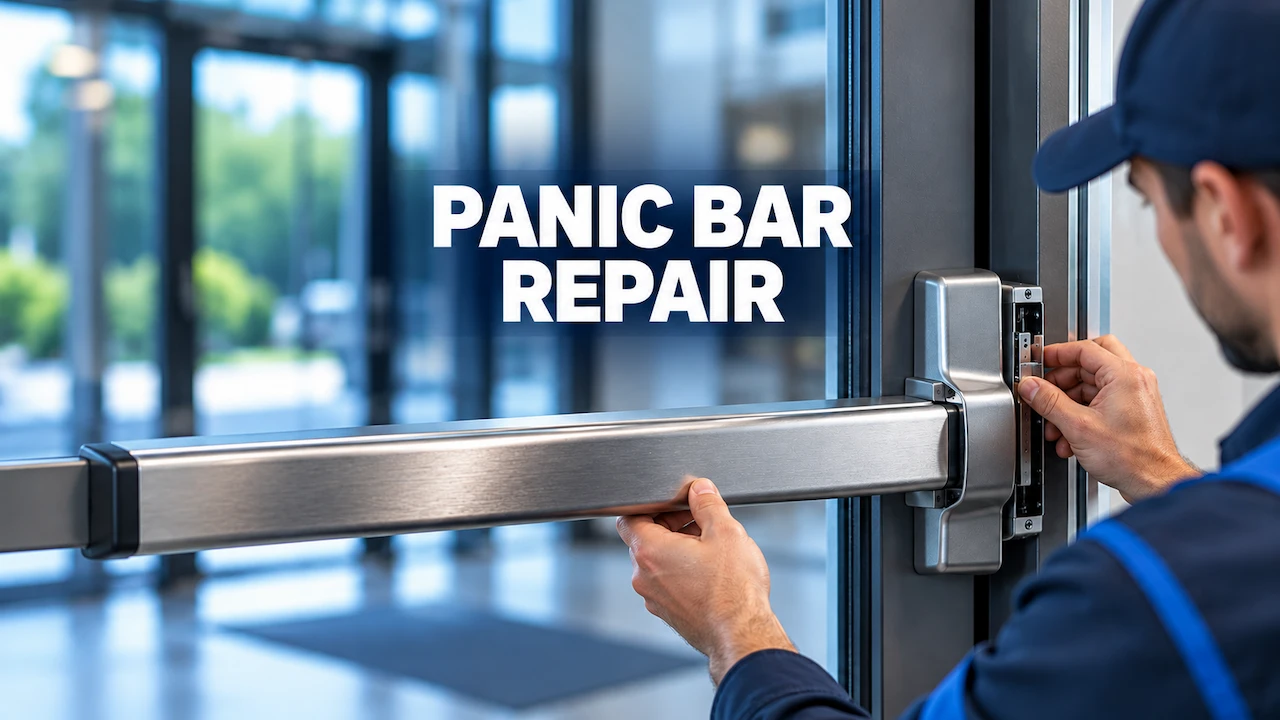
When a panic bar fails in your commercial building, it’s not just inconvenient it’s a safety hazard and a code violation. Employees pushing on a bar that won’t release a door, a latch that won’t retract, or a mechanism that sticks halfway can create dangerous delays during emergencies.
I’m going to walk you through the most common reasons panic bars fail, which problems you can check yourself, and when you need to stop using that exit and call a professional.
Why Panic Bars Fail: The Most Common Problems
Most panic bar failures fall into a handful of categories. Knowing which one you’re dealing with helps you decide whether this is a quick fix or a bigger problem.
Stuck or Stiff Push Bar
The bar presses but feels stiff, or it won’t push all the way down. Usually caused by dried-out internal springs, dirt buildup in the mechanism, or corrosion from weather exposure on exterior doors.
Latch Won’t Retract
You push the bar fully and it moves smoothly, but the latch doesn’t pull back from the strike plate. This means the linkage between the push bar and the latch is broken, disconnected, or badly worn. It can also happen if someone overtightened mounting screws and warped the internal housing.
Door Won’t Open Even When Bar Is Pushed
The bar works, the latch retracts, but the door still won’t budge. Check for a secondary lock someone engaged without realizing it blocks the panic bar function. Also common: the door frame shifted and the latch is binding against the strike plate.
Panic Bar Rattles or Feels Loose
Loose mounting hardware. The bar might still function but won’t for long, and it won’t pass an inspection.
Quick Checks You Can Make Yourself
Before calling a locksmith, there are a few things a business owner or facility manager can safely inspect. If any of these checks reveal a problem, stop using the door as an emergency exit and call a professional.
- Push the bar from a closed position and watch the latch does it fully retract into the door edge?
- Open the door and inspect the strike plate on the frame is it damaged, bent, or misaligned with the latch?
- Check for visible cracks in the panic bar housing or bent components.
- Test any secondary locks or deadbolts are they accidentally engaged?
- Look for obvious loose screws on the bar’s mounting points.
Do not disassemble the panic bar mechanism itself or try to force a stuck component. These devices are life safety equipment and have specific installation and adjustment requirements.
When to Stop Using the Exit and Call a Locksmith
Some panic bar problems are urgent. If you see any of these, take that exit out of service immediately and get professional help:
- The bar pushes but the door won’t open at all.
- The latch is visibly stuck in the extended position and won’t retract.
- Any part of the panic bar is cracked, broken, or falling off.
- The door only opens sometimes when the bar is pushed intermittent failure is unpredictable and dangerous.
- You can see daylight around the latch when the door is closed, meaning it’s not securing the door properly.
This isn’t the place to try a DIY repair. A malfunctioning panic bar can trap people inside during a fire or other emergency.
What a Professional Locksmith Will Do
When we respond to a panic bar service call, the first step is diagnosis. We’ll test the bar, inspect the internal mechanism, check frame alignment, and look at the strike plate fit. Often the fix is straightforward lubrication, tightening hardware, adjusting the strike, or replacing worn springs.
If the mechanism is damaged or the bar is beyond its service life, we’ll recommend replacement. Modern panic bar hardware is more reliable and easier to maintain than older models, and upgrading often solves recurring problems.
Can You Prevent Panic Bar Failures?
Yes, with regular maintenance. Panic bars should be inspected and serviced at least annually more often on high-traffic doors or exterior exits exposed to weather.
A maintenance visit includes cleaning and lubricating moving parts, checking and tightening all mounting hardware, testing the latch retraction, and inspecting the strike plate alignment. Catching small issues early prevents bigger failures later.
Frequently Asked Questions
How long do panic bars typically last?
A quality panic bar in a moderate-traffic location should last 15-20 years with proper maintenance. High-traffic doors or exterior installations in harsh weather may need replacement sooner. If your bar is over 20 years old and starting to have problems, replacement is usually smarter than repeated repairs.
Can I replace just the internal mechanism instead of the whole bar?
Sometimes, if the manufacturer still makes that model and the housing isn’t damaged. But many older panic bars have discontinued parts, and labor costs often make full replacement the better value.
Should I repair or replace a malfunctioning panic bar?
If the bar is less than 10 years old and the problem is minor loose hardware, worn springs, misalignment repair usually makes sense. If it’s older, has multiple issues, or parts are hard to find, replacement is typically the better long-term investment.
Ready to get started in Greenwood Village?
Doctor Lock is here to help with panic bar not working in Greenwood Village. Reach out today and we’ll walk you through your options, answer your questions, and book a time that works for you.
Call (720) 743-9240 or visit Doctor Lock to schedule your Greenwood Village appointment.